Sunday, October 29, 2006

The Dalai Lama and Cake

For the first time since we came away we have managed to stay in one place more than three nights! We are in McLeod Ganj, home of the exiled Dalai Lama (I have been trying convince Andy that "Dalai" is NOT Tibetan for "resembles") and a lovely spot in the Himalayan foothills. We are perched on the side of green mountains surrounded by snowy peaks, and the best thing is that the weather is sunny, fresh and gloriously cold at night. Such a treat after the endless sweatiness we have suffered in the rest of India. Andy spent the whole of yesterday climbing up to the snow line; 1000m and about 24 km altogether to take in some stunning views and clear air. We estimated that this was the minimum necessary height to escape the sound of vehicle horns and bronchial passages being cleaned, although he only found out about the local bear and panther population when he got down...
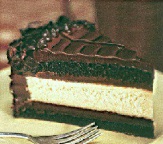
The village is very well equipped for travellers (some would say it was spoiled but I challenge those people to live for two months without cake or booze) and we are having a great time browsing for souvenirs, eating Tibetan noodles and even MEAT and spending every afternoon stuffing our faces with cake and hot chocolate. Bliss. I have even managed to be ill by just the right amount - enough to lose a few pounds but not enough to seriously impinge on the cake eating...
I'd better get to the religious stuff... The Dalai Lama has lived here since 1959 and there is a big Buddhist temple complex a few hundred yards down the mountain from the village. He does sometimes give public audiences but we've struggled to find out exactly when these are as they seem pretty last minute. We're presuming that if something is about to happen, we will hear about it. There are lots of Buddhist monks here, as you would expect (bizarrely, we saw one climbing a tree this morning at the holy lake. I got a picture, of course), floating serenely about in their dark red robes with shaved heads.
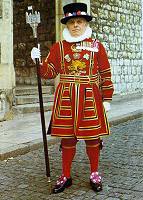
Naturally, and tragically, the western contingent feels it necessary to emulate these monks. We have seen one or two shaved heads (on the girls!), LOTS of revolting crusty dreadlocks, and the current vogue is to purchase a large Tibetan blanket (think picnic rug in grim colours) and to swathe yourself in it in an attempt to look like a large, white, Tibetan yak farmer. I wonder what people would think were a small Tibetan to take the opportunity whilst in our capital city to see the sights dressed as a miniature Beefeater?
So, we leave on an overnight bus tomorrow for Delhi, where we have one more day of cows, beggars, hawkers and filth before flying to Hong Kong... I'd love to write some more about McLeod Ganj but I'm too busy drooling over the Kowloon Hotel's gorgeous looking website. Mmmm luxury!

Tuesday, October 24, 2006

A Pause in the Punjab

Local wisdom informed us that all you need is a day in Amritsar, but in a rare display of leisurely tourism we gave it two. The capital city of the Sikhs sits on the Pakistan border on the Grand Trunk Road to Lahore, and after emerging from what will be our last overnight train we took the free pilgrim bus to the temple to get our bearings. The Sikh religion is designed to combine the best parts of Islam and Hinduism, but the the most important part to us was that all the tourism stuff is FREE!
Having rejected the free hovel pilgrim dorm, however, our search produced a local guest house where our usual cheap rate got us a lofty 2 piece room complete with telly, hot water, 7 doors and 12 light switches. Content, we dragged ourselves away from the TV and hit the temple.
Surrounded by chaotic streets and tourist stalls, swamped by thousands of glazed-eyed devotees, we weren't expecting much of the temple but found ourselves looking down at a peaceful lake with the temple in the middle and the hushed crowds circling, bathing and praying in an oddly serene environment. The Sikh religion fosters a strong warrior caste, as the British Empire found both fighting against them and with them, and the walls all round the temple are filled with memorial plaques and donations from Sikh military units. There are still plenty of the archetypal tall Pathans about, guarding the temple in their full ceremonial kit with swords and daggers, the kind it was easy to see defending the Koh-i-Noor against Flashman; they all reminded me strangely of Bernard Bresslaw's Afghan Bungd-it-in in Carry on Up the Khyber. It was inside this temple in 1984 that extremists demanding a Sikh state were attacked by Indira Ghandi's Army; this sacrilege led to her assassination by her own Sikh bodyguard later that year.
Crossing the bridge to the temple, we joined those headed for communion where half of a bought offering of sweets (prasaad) is then doled out to pilgrims; this seemed to involve too many pairs of hands for our liking and we declined...

On then to attraction number 2, and more imperial shame for us; in 1919 the garden of Jalianwalla Bagh was the site of a massacre, by British troops, of demonstrators protesting about anti-sedition laws. The troops occupied the only exits and opened fire in a confined space on 20,000 demonstrators killing over 400 of them... the park was a decent enough memorial, but we actually seemed more of an attraction to the national tourists who harangued us for photos, only spared when they couldn't get their cameras to work.
And finally, no trip here would be complete for an Indian without a jibe at the Pakistanis. Every evening, 30km away, a ceremony is conducted to close the border. Thousands trek to fill the purpose-built auditorium with national flags and hats to chant for India and watch the ceremony. Both sides have obviously formalised the procedure but try to out-do each other with lots of arm swinging and high-kicking up to the gate; the drill has come a long way since the Raj and would make a guardsman weep! Though the crowd was far bigger on the Indian side, we secretly preferred the black rig of the Pakistanis to the khaki of our side, the victory complete when one of the Indian sepoys swung a wild arm and knocked off his own hat! 1-0 Pakistan this day!

Sunday, October 22, 2006

Chota Diwali!

Delhi is today recovering from last night's Diwali celebrations, a culmination of a five day festival which is of equivalent importance to Hindus as Christmas is to Christians.
We were lucky enough to be invited to spend the evening with Reema, a friend of Andy's who lives in Delhi. She and her husband Ani were hosting her mother, who is from Kerala and had many interesting stories of Keralan tradition. Diwali is also known as the Festival Of Light as traditionally on the fifth day of Diwali the God Rama returns to the house after his period of exile. Many candles and lamps are lit to light his way home and traditionally all the lights in the house must be left on.
After lighting many candles and placing them on Reema's balcony we set off to her friend's apartment to observe her and her mother performing "puja", a Hindu holy ritual. All the apartments were lit up with candles and fairy lights, and it looked very like Christmas - some of the strings of lights were musical (this annoying habit seems to have caught on in India as well!) and so we were serenaded by "Santa Claus is Coming to Town" and other Christmas ditties.
At the apartment a table was set up with patterns of footprints decorating it in different colour powder. These footprints are to herald the Goddess Lakshmi, the goddess of fortune who may also be welcomed into the house. The puja was performed in front of a small altar (placed on top of the fridge to save space!) which had small statues of Ganesh and other personal gods and goddesses, marigold flowers and candles on it. Reema and her friend helped her mother with the chanting - the atmosphere was somewhat lightened by their giggling when they realised a page was missing of the chant and they couldn't remember the words...! The mother carried on regardless, taking a candle and circling it around the altar three times, then passing it on to us to do the same. Afterwards rice and flowers were scattered over the altar and around the house, and each person given a red mark on their foreheads with rice stuck to it as a blessing.
After sharing some of their delicious home made sweets (the giving of sweets has become part of the tradition) we moved on with Reema, her mother and Ani to another friend's, Aratna's, house. There we had some wine and food and chatted about the festival and the various regional difference in how it is celebrated, among other things. This was in between huge explosions which seemed to rock the entire apartment building - I have never seen so many fireworks in my life. Fireworks have become perhaps the most popular part of Diwali and as you can perhaps imagine, health and safety simply doesn't come into it. Small children were hanging around the streets and apartment car parks with enormous rockets and firecrackers, lighting them, throwing them, going back to them to see if they were lit properly.... We could hardly watch at times, convinced there was going to be an horrific injury. The fireworks continued over the entire city without a lull from late afternoon right up to about midnight. By the time we moved from Aratna's to Reema's apartment around 11pm the car parks were littered with spent fireworks which we crunched through . Several times we had to stop the car as a rocket was about to go off right in the middle of the road, and they were being lit within a couple of feet of cars, houses and crowds of people, it was unbelievable - the scene looked like something from Bloody Sunday. Aratna's take was thus; "there is no health and safety in India. There are so many of us that no-one cares if a few are killed...." By the end of the night a thick smoke hung over the entire city and the temperature actually rises a couple of degrees due to the amount of fireworks lit.
Today, finally, all is quiet - hours of sudden explosions have definitely taken their toll on our nerves which were starting to become very frayed at times last night. We have had a slow morning to recover, regrouping just enough to get going again tonight, this time on the overnight train to Amritsar....

Friday, October 20, 2006

Spooky Resemblance


Okay, does anyone else think this guy looks like Richard? In the flesh it was very spooky. An Indian, able-bodied Richard. Who'd have thought? And yet, he looks nothing like Matthew... (ooh maybe he's Richard's real twin and Matthew is an evil interloper??).
Thoughts?

Relief at Lucknow

A month is not long to see much of a big country like India, but at the speed Rach and I are travelling we may not need much more.
Done with Calcutta and travelling swiftly up the Ganges back to Delhi for the festival of Diwahli, we decided to break the journey, relieve it if you will, in Lucknow.
Most will recognise the name as associated with British India and the 1857 Mutiny, known in India as the First War of Independence, so we took ourselves off to the old Residency to do some learning...
In 1856 the British East India Company annexed the region around Lucknow, exascerbating a growing emancipation movement amd unrest about textile imports. One of the decisive sparks to the uprising was the issue of new cartridges to Indian troops, the ends of which had to be bitten off and were rumoured to be coated in fat made from cows or pigs; taboo to both Hindu and Muslim troops. Insensitive handling of this situation led to rebellion and a number of regiments being disarmed while others, such as at Meerut, mutinied and killed their British officers. The rising spread across much of the North of the country, including Delhi.
Upon the outbreak of the rising, the British inhabitants of Lucknow took refuge in the Residency, holding out for 87 days until a force managed to relieve them...only to become besieged as well for a further 2 months! Of the 2994 people initially crammed into the grounds, including some 600 women and children and 700 servants, only 980 survived the ordeal. After the uprising, the East India Company was wrapped up and all operations in the country handed to the Crown.
The Residency at Lucknow has been maintained as it was found after the final relief and the shattered walls and cannon ball marks can still be seen; we spent a good 3 hours wandering the grounds and looking at the small museum. After paying 150 Rs to enter, compared to the Indian rate of 10 Rs, an Englishman cant help wondering, however, whether the nation is still exacting its revenge on us colonialists...

Tuesday, October 17, 2006

Lies, Damned Lies and Indian Train Timetables.

Somebody once said its about the journey not the destination. As often as we've cursed that ignorant fool, after 3 weeks of travelling across this country and experiencing the full variety of locomotion known to the penny-pinching traveller, we thought it worth describing ground transport in India.

1. Train. India's proudest institution, employer of over a million people and the only way to grind out the miles from state to state. As if the noise and chaos of Indian train stations weren't confusing enough, the number of classes and train types will leave you spinning; express, mail and passenger trains; 1st class, 1st class a/c, 2nd class, 2nd class a/c, 2-tier sleeper, 3-tier sleeper, sleeper, air con chair car, 3rd class and baggage class. Predicting which is your train on which platform and then scrummaging down to get on and grab your reserved seat is the next challenge; people have been known to throw small children through the windows to claim seats! Average arrival time for a train - 3 1/2 hours late. Average number of cows which have to be shooed off the line as the train pulls into the station - two.


2. Bus. These are the last refuge for employment of sociopaths in India. The bus is in no circumstance to leave at the scheduled time, to have air con nor fans nor leg room space for creatures larger than a gibbon. There is no limit to the amount of passengers allowed on the bus, in fact the driver is paid per passenger, so the more the merrier. The driver is also fined for each minute that the bus is late. This results in the bus leaving late from the bus station as it has waited for the golden 500th passenger before departing, however the driver then drives like a loon (disregarding those passengers with a tenous grip on the door as their only method of staying on the bus) in order to reach his destination on time, or as few minutes late as possible. Makes for an interesting journey....


3. Taxi. The omnipresent yellow Ambassador (reincarnated from the Morris Oxford), still manufactured in Calcutta, is the dominant taxi in that city. Taximeters are not to work and drivers are in no circumstance to speak English, but this should not prevent communication and argument about fares. Lack of knowledge of street width, one-way systems and street names is desirable.


4. Auto-rickshaw. The tut-tut of Asia fame, this noisy 3-wheeler is the dominant form of taxi in most cities except Calcutta. Our most memorable journey was in Varanasi en route to the train station, for which we had allowed plenty of time in Friday night rush-hour traffic. The pilot, who had done the Indian equivalent of The London Knowledge, fancied himself a stunt driver from a Jackie Chan film and took us hurtling through the twisting back streets, careering across the main thoroughfares and in and out of the blaring traffic. We sat transfixed, both hands gripping the rail, being deafened by the blasting of the horn (the only "safety feature" needed on any Indian vehicle - working brakes are optional) which made his headlights dim... All we could see through the sliver of windscreen that was transparent was pedestrians desperately squashing themselves against walls in an attempt to become invisible, cycles wobbling to one side at the last minute, and the large brown backside of a sacred cow, which was very unceremoniously run over. Luckily no damage was done, the supposedly sacred ruminant merely looked confused and a bit offended.


5. Rickshaw.


a) Bicycle Rickshaws
A difficult one this. Rickshaw wallahs are among the poorest workers in the country and need a few rupees more than any other form of transport worker. However, anyone who can sit whilst an emaciated old man gets off his bicycle on the hills and pushes you up at a pace slower than your normal walking pace either has no conscience or fancies themselves a sahib/memsahib in Raj-era India. Or both.

b) Walking Rickshaws.
Ditto, only worse. More emaciated, poorer, older men, often not even wearing shoes. They can only take you short distances - conclusion, get off your arse and walk...

Rules of the road.
1. The largest vehicle has right of way.
2. Drive mostly on the left. Use of the middle and other side to avoid potholes is customary; where this could lead to collision with an oncoming vehicle, see Rule 1.
3. Circular road junctions are in no circumstances to be treated as roundabouts; for right of way, see rule 1.
4. Use of horn is mandatory on starting the engine and thereafter on encountering other vehicles, pedestrians, animals and all inanimate objects. Intimidation-by-horn can supercede Rule 1.
5. To quote our personal rickshaw driver in Agra (nickname Mr Toad - poop poop!), "in India, every side is right side".

Poverty and Charity in Calcutta

We arrived in Calcutta three days ago during a rain storm, which was a nice change from the fierce sun. On first impressions Calcutta seems like any other Indian city - filthy and falling down. Many high rise buildings are completely black with pollution and seem to be held together only by the trees and plants which grown between the bricks. Of course the poverty here is legendary and it is there on the streets for all to see. Here is the only city in which we have seen rickshaws which are not bicycles, but which are pulled by a man on foot - frequently extremely old and skinny wearing a simple dhoti (sarong) and no shoes. Andy and I can't imagine a situation where we would feel comfortable having one of these men pull us around the streets. At the end of our road is a daily soup kitchen, and hundreds of men women and children queue for a small plastic bag of rice and dhal (lentils).
Many Westerners come here to volunteer with the various charities which do work in Calcutta, many for the various Mother Theresa Sisters of Mercy hospices and childrens homes which are dotted around the city.
Whilst having breakfast two days ago we met one of these volunteers, an American girl called Sarah. She offered to take us to Kalighat, which is the Sisters of Mercy hospice for the dying and destitute. Charity workers tour the railways stations and underpasses of the city and bring back the worst cases they can find, who are then cared for in the hospice until death. Yesterday afternoon we took the metro with Sarah and an English couple called Jonny and Lucy and spent the afternoon helping the patients at Kalighat. They are split into two large rooms of men and women, and the boys help the men and the girls the women. We wore aprons and surgical masks, as many patients have tuberculosis, and were thrown in at the deep end. When we arrived the women were receiving their medication. I took the tablets for each patient with a cup of water and helped the patient to sit up and take the medication. Some women seemed fairly with it whilst others seemed mere minutes from death, lying huddled onto their low bed with just a small pillow and a sheet for comfort, their limbs thin and horribly twisted. Some were obviously mentally disabled, in varying degrees, with the more physically able allowed to roam around the room and help those less able than themselves. One woman in particular was shockingly skeletal - so much so that it would have been difficult to tell if she was a woman or a man. Despite this, she was able to sit up and eat her food with only a little help. We spent most of the afternoon simply talking to the women, holding them and comforting them. I helped one very weak old lady to eat her food - a simple and cheap meal of rice and dhal - and helped her to drink a little water. When I had finished she suddenly became lucid and started to kiss my hand.
It was a very intense afternoon and after we had finished the volunteers all went up to the roof to dissect the afternoon over chay and biscuits. Sarah is helping there until Christmas, and Jonny and Lucy have been working at another charity for the past three weeks. A volunteer can come for any length of time, and there are also Indian women who help there and one tiny old Sister in the Mother Theresa style sari. We enjoyed our afternoon and it was extremely interesting, but I don't think either of us fancies the idea of doing it for weeks at a time....
Later in the evening we met up with our group of new friends for dinner and a few drinks - it was really nice to have some new people to talk to! We had a long dinner full of interesting conversation about where we'd been and what we'd seen - good travelling tales!

Friday, October 13, 2006

Taking the waters of the Ganges...


Not literally, of course - that would doubtless kill us within hours; the particulate level of faecal matter in the river is supposedly 250,000 times the safe limit!
We find ourselves now in Varanasi, also known as Benares, the city of Shiva on the banks of the Holy Mother Ganges. This is the destination of thousands of Hindu pilgrims who come here to the ghats or steps along the Western bank to wash, drink and be cremated; all 3 acts often occurring within metres of each other.
Our journey here from Khajuraho was relatively pleasant. Leaving the town by bus along a dirt road, we arrived at the nearest railhead 4 hours later and waited for our night train to whisk us East overnight in just 11 hours, arriving a mere 4 hours late. Most of the guest houses here are orientated around the river so we made our way blindly through winding streets, picking up the usual helpful guides along the way, and installed ourselves in a suitable hostel. The city seems so focussed on the river that its back streets are some of the dirtiest we have seen, a rare trophy in India! Here people come a poor last in street priority of cow, dog, goat and monkey and after being pushed out the way by your 5th cow it starts to get to you.

The Ganges holds a mystical attraction for Hindus; it is believed to flow from the foot of the God Vishnu and that washing in it or drinking from it can absolve the sins of the past 3 incarnations, and being cremated beside it will release one from the eternal cycle of reincarnation. As such the funeral business here is worth a fortune, with bonfires burning night and day, a constant industry for preparing the bodies, praying for them and carrying them to the pyres and finally to the river. Though we didn't take photos, we spent a good hour from a vantage point watching the process one night; slightly ghoulish and Rachel the pyro was a little too interested for my liking!
Dawn is one of the best times to witness the ritual puja, or cleansing, performed in the river by Hindus and so we dragged ourselves up for another Indian dawn to haggle with a boatman and see what we could see. It is sometimes difficult to distinguish between someone having a good scrub and a real Brahman praying, but we tried. Every now and again there is the distraction of a tragic westerner who has lost it and gone native, swimming merrily, and the odd local washing his bike in the river before taking a long drink pull from the magical waters!
Next move is another mammoth overnight train journey, swiftly down the Ganges to Calcutta.

Sunday, October 08, 2006

Uncomfortable Journeys and Indian Eroticism

We are now in Khajuraho, site of famous erotic temples, recovering from the two day journey we took to get here. First leg was Agra to Jhansi on the train. The trains are pretty good in India - reliable and on time, but slow, hot and busy. We shared our 6 person space with 7 Indians, although three of them were children. One of the families spoke a little English and they shared their snacks with us - it was a funny biscuity, cakey thing in a mush called "milk cake". It was incredibly sweet and left you with a tormenting thirst. I hid in my book and let Andy force most of it down.
We arrived in Jhansi in the dark and let our rickshaw driver show us to a hotel owned "by a friend". It seemed clean enough and the prices were ok so we stayed - thus landing ourselves with the stalker manager from hell. As we were just getting sorted and ready for a well deserved shower, he bowled into the room catching me in my bra and Andy completely naked. Unperturbed, he proceeded to engage us in lengthy conversation, remarking that he had a wife and large family, presumably to reassure us he had seen it all before. We had to firmly shove him back out of the door (still muttering about erotic sculpture at Khajuraho?!) - he then took to knocking on the door first thing in the morning, following me up to the room, and when I was caught with him alone on the top floor of the hotel in a power cut I have to admit I was slightly worried!
To get from Jhansi to Khajuraho we had to take the local bus. A complete nightmare. It takes 6 hours to go 170kms and is built for midgets, so that you can't actually fit your knees into the space where they are meant to go, making the journey even more uncomfortable. We left the bus station 2 hours late - we hadn't realised that as well as filling all available seats, the conductor also wants to fill all the available standing room and every gap of air in the bus. There were what seemed like hundreds of people on the bus, all pressed up to each others armpits and hanging out of the doors. We bumped along like this all day. It was extremely hot, sweaty, dusty and dirty. Tethers were short and the conductor was even punched by one unhappy customer.
So, now we are going to stay in Khajuraho for a few days and recover. There are around twenty temples of the Hindu and Jain religions, dating back as far as 900AD. The temples are very well preserved and they depict all aspects of life in the village around that time, including what everyone got up to in the bedroom. Well actually they seemed to be getting up to it in public, in large groups and even with an unfortunate horse. Of course we ignored all the other works and took pictures of all the porn ones...

Friday, October 06, 2006

Carnage at the Taj Mahal..

First stage on our Indian wander was south and east to Agra, site of the Taj Mahal which we supposed had to be seen; Rach was focussing more on her bowels last time she was here and didn't enter the site so it was as if we were both new to it.
As usual, it was all about the journey rather than the destination and Indian railway travel is testament to that. Leaving our back alley guest house, we fought through the beggars, salesmen, rickshaws, cows and dogs to New Delhi station (new in name only) and joined the pantomime of the railways. Our 6-person carriage was quickly overrun by a family of 10 Indians with around 15 bags between them who, when they eventually settled, were supplanted by 4 other western travellers; more comfy but less of a spectacle. As the kilometers passed and the sun grew hotter, we saw yet more wandering cows, water buffalo, monkeys and all manner of human life from the window. Each station was a consumer's paradise; magazine stalls were rolled past on the platform for our reading pleasure, tea sellers passed us clay pots of chay to drink and then throw out the window, and purveyors of all manner of local food and cold drinks offered while the ever-present beggar children swept the carriage floor or performed sad dances in hope of a rupee.
Agra is a fort town on the banks of the Yamuna river (assessed as too polluted to support any life form we understand) where Shah Jahan, the Moghul ruler who built the red fort in Delhi, built this majestic mausoleum for his missus Mahal. He was later imprisoned by his son and lived the rest of his tragic life in a cell looking across the river at the Taj.
Unbeknown to your travellers, and our out of date guide book, the Mahal is closed on a Friday and our plan to visit at dawn was scuppered; having learnt this at 5pm, this left us little time to view the site at sunset before it closed at 730pm! And so the carnage began, as we queued with a great mass of Indian and international tourists frantic to get the same photos and see the tomb. The security procedures for entering were ludicrous and we lost more time as I was forced to check in the weapon of mass destruction I had disguised as a USB camera cable. It seemed we were incapable of finding anyone with skills enough to take a straight photo of us in front of the building, and the light was fading as we queued to enter the mausoleum. A very Indian affair then ensued as a thousand tourists attempted to enter and leave from the same narrow doorway in the failing light, with one hysterical guard blowing a whistle to demonstrate the famous echo in the tomb and actually throwing 2 punches at a particular errant tourist; we feared for our lives as we exploded into the darkness of the tomb to see...not much, actually. Lit up only occasionally by the odd camera flash (photography forbidden by the way), somewhere in there Shah Jahan lies with his sweetheart and only later were we told of the spectacular pietra dura inlaid marble decoration therein. Oh well...
In order to make the most of the site, we dragged ourselves up at dawn and finally got to appreciate the serenity of the site at sunrise, although we still cant find anyone to take a decent photo!
Next step is Jhansi and the erotic temples of Khajuraho...by train!

Wednesday, October 04, 2006

Intro to India


Well, here we are in country number three on our Grand Run Through The World. India, as everyone says, assaults the senses. We are staying in an area called Paharganj which is full of little grimy streets (the open urinal is right outside our hotel), swarming with hawkers of all kinds, cows, rickshaws and beggars. This morning we even saw a cow patiently queueing at the book stall... There are also a lot of travellers/tourists here, especially compared to Central Asia. They don't seem very friendly - too busy "finding themselves" to want to smile or chat. Its a bit like Thailand - everyone thinks they're discovering stuff and can't quite handle the presence of other Westerners.
We're enjoying browsing through the shops and eating in cafes and restaurants. Whilst our stomachs hold out, we are shovelling in as much curry as we can take... The kebab-and-chai cheap meal equivalent here is thali. We always have the veg option (we are honorary veggies for the duration of our stay here in India) and it comes in a metal dish with little compartments, either a small bowl or just a dent in the metal. In each separate dent there are two sorts of curry, rice, yoghurt and naan or chapati. The whole thing is really filling and costs the equivalent of 45p. We're hoping to claw back some of our Central Asian overspend!
A danger more immediate than stomach trouble is the risk of being mown down on the street... Walking through Paharganj there is an array of fanatastical sights. From a saddhu (an Indian holy man who lives on alms) going from shop to shop, to the brightly coloured souvenirs, to the amazing saris and salwaar kamizs and simply the mass of humanity that greets you every time you step out of the hotel. The danger with this is the need to keep eyes forward all the time while walking. If you gaze about too much you risk falling down a pothole, treading on cow sh*t, or a beggar, being run over by a rickshaw and even walking into a cow, who refuse to move out of the way for anyone.
Speaking of beggars, the poverty here is shocking, as many people report. We have given a little bit when asked, although we were then hassled by the little girl who wanted even more - you can't win. There are people living at the side of the roads, beggars with leprosy and every age from old men to tiny babies. At night the great mass of people sleeps lined along the roads, making quite an eerie sight.
On the other side of the coin, there are far more international boutiques and restaurants in the centre of town than when I was here 5 years ago, which is a bit of a disappointment - I suppose its to be expected. The richer Indians can shop at Levis or Benetton and eat at Pizza Hut or TGI Fridays.
On the sightseeing front, today we have been to see the Red Fort (see photo), which is very impressive although a little shabby. This was built during the Moghul dynasty, occupied by the British after the Mutiny in 1857 and is the symbol of Indian independence; it is from here that the Prime Minister address the nation on Independence Day every year. It is difficult to do too much walking around as it is unbelievably hot and sticky considering it is now October - very uncomfortable. Tomorrow we are going on the train to Agra to see the Taj Mahal and we are hoping that it will be a bit cooler out of the city...

Monday, October 02, 2006

From the Oxus to the Indus...


Death has no repose
Warmer and deeper than that Orient sand
Which hides the beauty and bright faith of those
Who made the Golden Journey to Samarkand.


And so we draw to a close our travels in Central Asia, headed inexorably South and East to Delhi for our speedy journey down the Ganges.

Betting is now open on how long it will take us to contract amoebic dysentary... there's a cream cake in it for any Slimming World member who can match Rachel's weight loss at the Wednesday morning weigh-in!

Sunday, October 01, 2006

Had Enough Of The Great Game...

Well, not much has been happening over the last few days - compared with our Tajik adventure, anyway. Andy and I are now back in Tashkent, from where we are due to fly out to Delhi. We have had just about enough kebabs, plov and chai to last a lifetime, and although Uzbekistan has some amazing sights we have actually now seen them all. Or all the ones we are interested in, anyway.
So we have been attempting to change our Delhi flights from the 4th to the 2nd - a marathon task involving the Uzbek Airways office in Fergana, the airport at Fergana (who denied all knowledge of there being any such flight), a days journey to Tashkent, the Uzbek Airways office in Tashkent, the Trailfinders office in Manchester and my mum, who was not helpful (only kidding mum!). We have now managed to ensure that we are on the next available flight out of here, leaving at half past ten tomorrow night. Unfortunately we will now encounter precisely what I was trying to avoid when we booked the flights originally - Delhi airport in the dead of night. Not for the faintheartened, as Jane knows well...
So, some of the things that we have endured - sorry - enjoyed over the last few days.
The second worst taxi drivers yet, from the Tajik border to Khokand. This is one of the reasons we are getting fed up with Central Asia - what should have been an extremely simple journey in a shared minibus for a fixed price is just not that simple once the locals see a Western face. Our presence sent the driver and his mate into hysterics as they saw their chance to make a quick buck. So we spent the journey being harrassed to pay over the odds, or hire them for our onward journey. They ended up not letting us off the minibus at the end of the journey, and we had to endure being pushed about and people shouting in our faces. Just not up for it any more. Because we (contrary to what they thought) didn't come down with the last rainfall, we stood our ground and got what we wanted, namely a minibus ride to where we wanted to go, for a fair price. Not that difficult, you'd think?
So we spent a couple of days in Fergana, main city in the Fergana valley region, known for its cotton harvest and its climate. And now known for its utter boring-ness. This is where we had the brainwave to get the hell out of Central Asia.
We were staying in a classic old Soviet hotel where guests are simply an inconvenience, somewhere beneath the cleaners in the hotel hierarchy. Maybe people run out of hotels a lot here without paying, but once again the receptionist went on and on at us to settle the room bill. We did offer to pay early, but then had to endure 20 minutes of messing around while the guy explained that although his prices were quoted in dollars, he wasn't happy for us to pay in dollars and if we did, we would receive 40 dollars change in Uzbek sum (a wad about the size of a house brick). We'd had enough by now so after lots of messing around he gave in and said we could pay when we left the next day, by which time he would have some dollars change for us. Unsurprisingly the next day nothing had been communicated to the rest of the staff and we went through the whole argument again. In the end it took us half an hour to check out, whilst we had the argument again with the new receptionist, dug our heels in, he called his money changer friend, and when this guy turns up with our change they try to rip us off. Arrrrggghhh!!!